

CEO essay
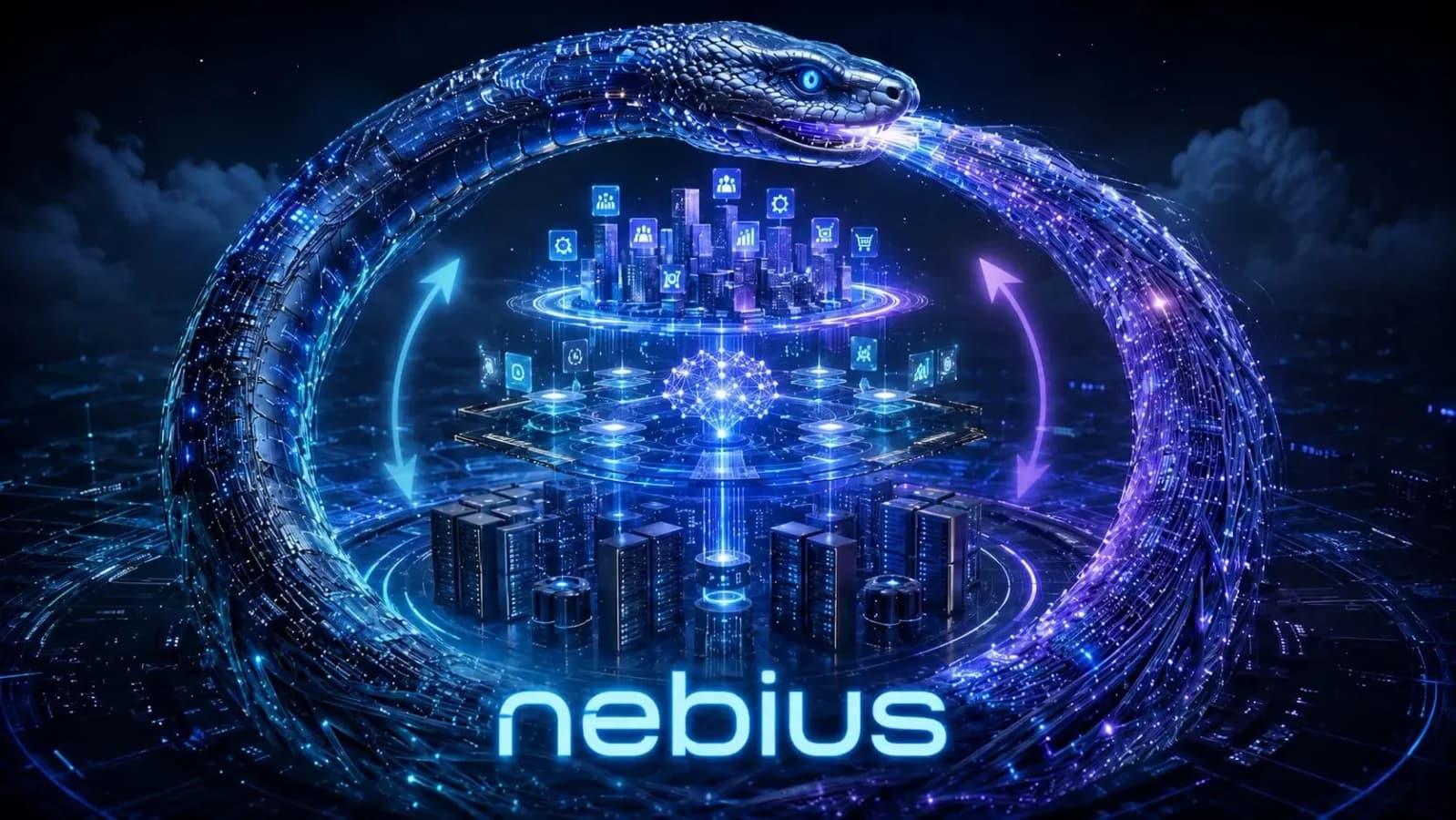
The Ouroboros of the AI Economy: When Partners Start Eating Their Own Customers
An interesting thought came to me after listening to an interview with one of Nebius' founding partners. As I understand it, Nebius is no longer positioning itself as just another AI cloud provider. It is moving deeper into the inference la...
The inference layer changes the role
An interesting thought came to me after listening to an interview with one of Nebius' founding partners. As I understand it, Nebius is no longer positioning itself as just another AI cloud provider. It is moving deeper into the inference layer: helping companies run, optimize, and serve AI models faster, cheaper, and with less friction. And this is where the AI economy becomes really interesting.
That is where the ouroboros begins
Today, companies like Nebius are infrastructure partners in the great AI race. They provide cloud capacity, GPUs, compute power, and the backbone that allows major AI players to scale. OpenAI, Anthropic, Meta, Microsoft, and others consume compute like dragons consume gold. But at some point, every infrastructure partner has to ask a very simple question: why should we only be the power plant behind someone else's models if we can also give customers ready-to-use inference, open-source models, APIs, optimization, security, billing, and a better cost structure ourselves?
The stack starts eating upward
First, AI labs feed cloud and infrastructure companies with massive demand for compute. Then infrastructure companies use that demand to build stronger and stronger platforms. Then they move up the stack. Not just: here are your GPUs. But: here is managed inference, here is model routing, here is optimization, here is API access, and here is enterprise control. At that moment, yesterday's infrastructure supplier becomes an economic competitor to its own partners.
This is not only another chatbot war
Not necessarily by building another ChatGPT. Something much more subtle is happening. The next layer of competition will not only be about the prettiest chat interface or the strongest frontier model. It will be about token cost, latency, privacy, customization, open-source flexibility, enterprise governance, and the ability to avoid dependency on a single closed API provider.
The enterprise choice is widening
For businesses, this is a very strong signal. Before, the choice was often simple: pay OpenAI or Anthropic and do not think too much. Now a second scenario is emerging: take an open or custom model, run it through a managed inference layer, optimize the cost, and avoid being locked into one provider.
Good enough can be a very strong product
This will not kill OpenAI or Anthropic. They still have frontier models, brand power, deep R&D, distribution, and excellent products. But the margin on mass-market enterprise AI tasks may start leaking away. Customer support, RAG systems, internal copilots, document intelligence, coding assistants, and analytical agents are a huge share of enterprise AI workloads, and they do not always require the most expensive frontier model in the world. Many companies do not need the smartest model on Earth. They need a model that is good enough, fast, secure, predictable in price, and controllable.
Routing may become the money layer
This is exactly where companies like Nebius, Baseten, Fireworks, Cerebras, and other inference or infrastructure players may become the new power layer of the AI economy. The AI market is maturing. The first stage was: who has the strongest model? The second stage is: who can deliver inference cheaper and more reliably? The third stage will be: who controls model routing and task orchestration? And whoever controls routing controls the money.
The beautiful and dangerous loop
That is why Nebius is interesting not only as an infrastructure provider. It is interesting as a sign of where the AI market is going: a market where partners, customers, and competitors constantly change places. Today, you sell shovels to gold miners. Tomorrow, you open the gold exchange yourself. That may be the most beautiful and dangerous part of the AI economy. The ouroboros is smiling.
This article is a strategic market-structure note. It is not investment advice and does not recommend any security, provider, or transaction.
Registered sources
No comments yet.